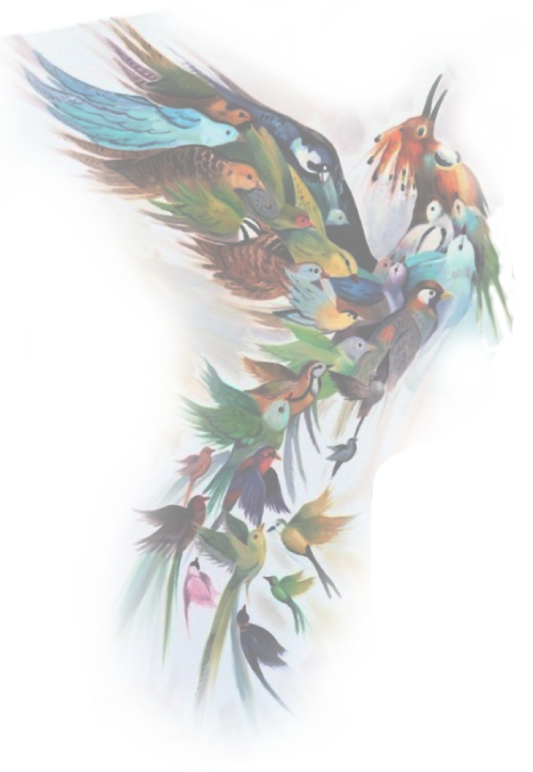




There is a world of meaning that does not belong to things, yet without which things could not appear as intelligible at all.
It is not material, and it is not subjective. It does not arise from individual minds, nor does it dissolve into abstraction. It precedes the appearance of objects and the formation of subjects alike, offering a shared horizon in which beings can show themselves as meaningful, ordered, and real. This world is not elsewhere; it is between. It is the condition through which the sensible becomes intelligible and the intelligible becomes perceptible.
This is the imaginal.

Edoardo Tresoldi, Archetip. Installation, Abu Dhabi, 2017. Photo by the artist.
To speak of the imaginal is not to speak of fantasy, illusion, or private invention. It is to name an incorporeal order of meaning that precedes individual things and conditions their knowability. The world is intelligible because it participates in a prior horizon of meaning that is not of its own making. Its intelligibility is objective precisely because it is received, not imposed. Were this not the case, meaning would either have to arise from sheer individuality—which is incoherent—or be fabricated by the knowing subject, rendering knowledge a kind of fiction.
Traditional worldviews did not treat this as a poetic or 'imaginary' idea. They treated it as a description of how reality is structured.
But to understand how the imaginal became thinkable—and how imagination came to be seen as more than either deception or creativity—we need a genealogy. Not a museum of doctrines, but a lineage of questions: What is an image? What does it do? How does thought happen? What is the relation between seeing and knowing?
In classical antiquity, imagination—phantasia—enters philosophical history under suspicion. In a broadly Platonic view, the image tends to appear as copy, semblance, and seduction: a production that can intensify attachment to appearance and weaken contact with truth. The imagistic life is unstable; it moves, it mimics, it persuades. It can enchant, but it cannot guarantee reality.
This suspicion, however, must not be mistaken for a rejection of the imaginal itself. Plato’s critique is not directed at images as mediating forms, but at images cut loose from participation in truth. The world of Forms is not an abstract elsewhere, but the ontological condition that allows appearances to be meaningful at all. When images participate in this order, they do not deceive; they disclose. It is only when images are severed from their intelligible source that they become simulacra rather than signs. This Platonic intuition—that intelligibility precedes appearance and grounds it—will later become decisive for Neoplatonic metaphysics, and through it, for Islamic philosophies of the imaginal.
With Aristotle, the image becomes structurally necessary. Sense and intellect do not speak the same language. Between sensation and understanding, Aristotle places the faculty of phantasia: the capacity that translates perception into thinkable form. Thought is not pure abstraction; it works through images. The mind cannot grasp without passing through the imagistic medium. The image becomes the bridge by which the sensible becomes intelligible.
Aristotle’s intervention is often read as a rehabilitation of imagination, insofar as phantasia becomes structurally necessary for thought. Yet this structural necessity does not resolve the deeper ontological question of participation. When imagination is treated primarily as an internal faculty mediating between sensation and intellect—rather than as access to a real intermediary world—it becomes vulnerable to immanentization. It is this shift, later amplified in scholastic and modern epistemologies, that gradually relocates intelligibility from a shared horizon of meaning to the operations of the knowing subject.
Stoic and later rhetorical traditions begin to treat phantasia not merely as a mediator of cognition, but as a force capable of making the absent present, of giving intelligibles a kind of visibility, and of shaping the very texture of reasoning. In the rhetorical tradition, vivid mental presentation is not a decorative flourish; it is a technology of persuasion and presence. An image can reorganize the interior world, move the soul, and produce conviction.
Here, a crucial shift begins to appear:
Imagination is not only the weak link between sense and thought.
It is the medium through which thought is formed.
At the same time, these traditions never forget the danger of images.
An image can disclose, but it can also deceive. It can orient, but it can also manipulate. This is where a distinction becomes necessary—not moralistic, but ontological: image versus phantasm.
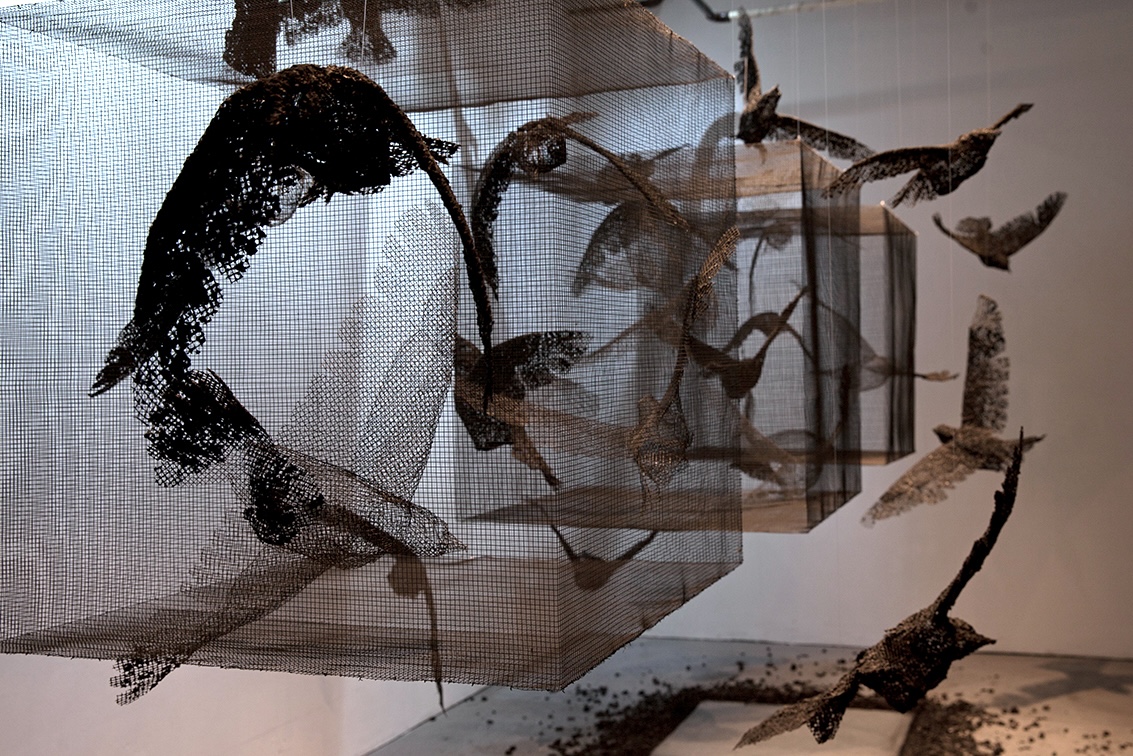
Edoardo Tresoldi, Control. Temporary installation, London, 2015. In collaboration with Gonzalo Borondo. Photo by the artist.
An image, in the strong sense, is not simply a picture in the mind. It is a form that participates in a real order of meaning. It bears truth without reducing it. It mediates without fabricating.
A phantasm, by contrast, is an image that has become untethered—appearance without grounding, vividness without fidelity. It is not “false” because it is imaginary; it is false because it is dislocated from the horizon of meaning that would make it answerable.
This distinction will matter later, when images begin to circulate in modernity at high volume but low depth—when representation multiplies while intelligibility thins. But the distinction is ancient: images were always powerful enough to require discipline.
From late antiquity into medieval life, imagination and memory are often treated as neighbors—sometimes indistinguishable in practice. It is here that the genealogy becomes startlingly architectural.
The “art of memory” does not treat thinking as something that happens automatically inside an isolated mind. It treats thought as something made—composed, crafted, built—by arranging mental images in ordered places. Memory becomes a spatial discipline. Images are stored in imagined structures: rooms, colonnades, theatres, ladders, gardens. One does not simply “have” ideas; one enters into them, moves through them, and recombines them. Thought becomes a kind of internal construction: a compositional act that depends on the ordered placement of images.
This is not a minor historical curiosity. It reveals an older understanding of cognition: to think is to arrange images within a structured world.
And because these internal architectures were used in prayer, meditation, contemplation, rhetoric, and the crafting of devotion, the image here is neither mere fantasy nor neutral tool. It is implicated in moral and spiritual formation. Images shape souls.
In such a world, imagination is not entertainment.
It is a faculty that can sanctify or deform.
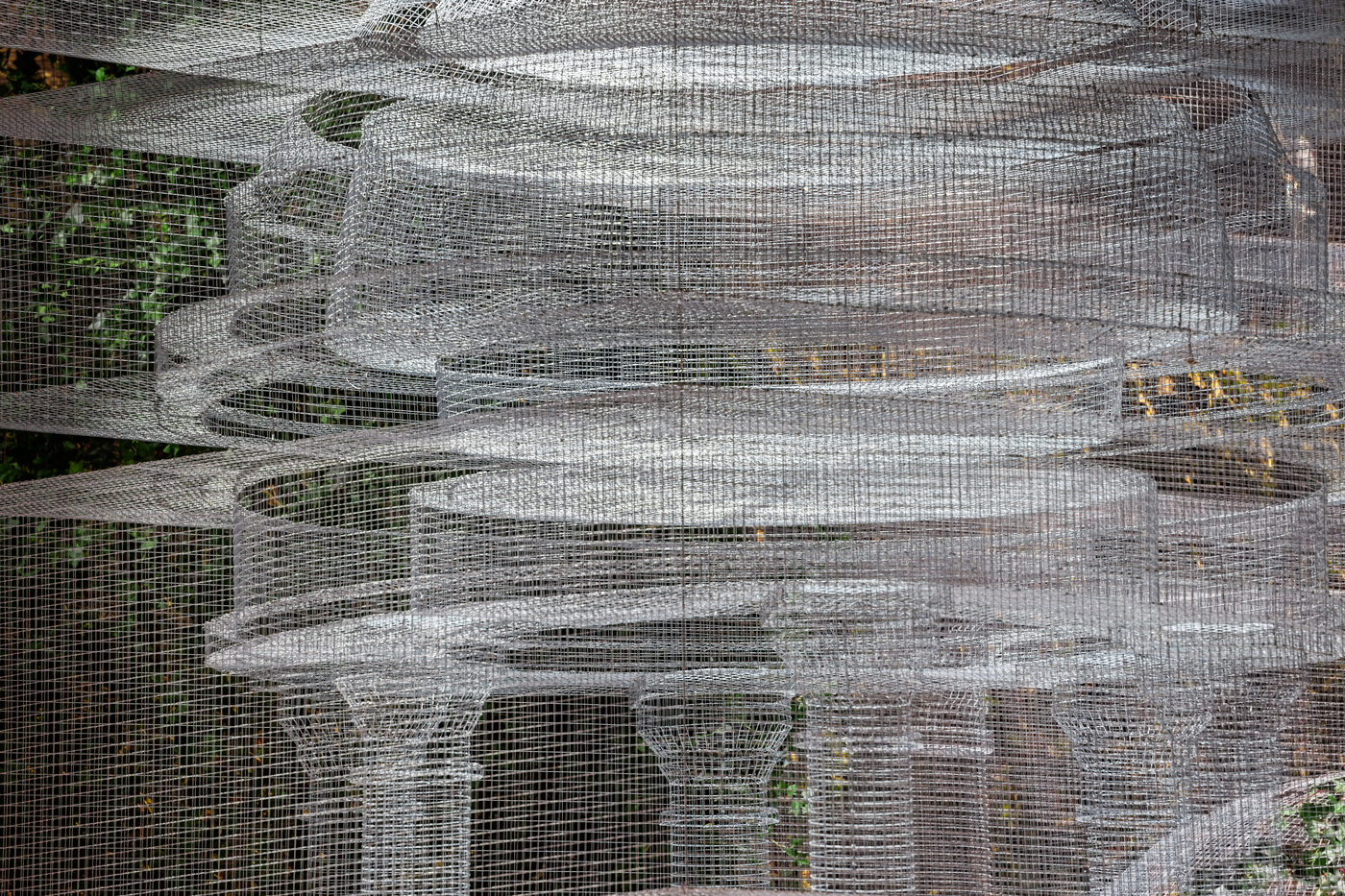
Edoardo Tresoldi, Archetip. Installation, Abu Dhabi, 2017. Photo by the artist.
In the Renaissance, the art of memory expands outward, sometimes explosively. Memory theatres, encyclopedic image systems, and occult philosophies begin to treat imaginal arrangement as a way of organizing reality itself—systems that attempt not merely to store knowledge, but to map correspondences, bind affects, and move the world through images.
In this context, images are not private; they become operative. The imaginal is not merely a mental theatre; it becomes a mediating field between human and cosmos, a domain where analogy, symbol, and correspondence are not poetic metaphors but real relations.
And then, in modernity, the poetic imagination appears—Coleridge, Baudelaire, and others—carrying a transformed sense of imagination as a power of synthesis and correspondence: a faculty that perceives relations and analogies, a kind of intelligence that apprehends a world threaded with meaning.
Even here, the older line persists: imagination is not merely fantasy. It is a way of perceiving relation.
What this genealogy shows is not a clean progress narrative—imagination emancipated from superstition. It shows a set of recurring discoveries:
Thought requires images;
images can disclose or deform;
memory and imagination are spatial and compositional;
imagination mediates between worlds;
meaning can be encountered through forms.
The imaginal is the metaphysical name for the horizon that makes these discoveries coherent.
For if images can mediate truth, there must be a real order of meaning for them to participate in. If thought is not merely projection, there must be intelligibility prior to the individual act of knowing. If correspondence is not a hallucination, there must be a world in which relations are real.
This is why the imaginal cannot be reduced to “the imagination.” It names an intermediary domain: neither raw matter nor pure concept, neither subjective fancy nor objective mechanism. It is the realm where meanings take form before they harden into propositions or collapse into sensation.
The imaginal is the world in which images are real without being material.
And therefore answerable without being reducible.
Here the architectural question becomes unavoidable.
If cognition itself was once understood as spatial composition—images arranged in ordered places—then architecture is not simply an external craft. It is a paradigm of how meaning is held.
But modern “architecture” arrives carrying a particular metaphysical posture. The word bears an inheritance of archē and technē—origin and technique—often emphasizing authoring, producing, controlling, solving. In many modern settings, the architect is imagined as a sovereign originator, a problem-solver who imposes order upon matter, a producer of forms that are justified by function, novelty, efficiency, or expression.
The older maker stands differently.
The term معمار does not simply translate “architect.” It implies another ontological register: not the one who imposes meaning, but the one who measures and mediates, who builds in correspondence with an order that exceeds individual will. The maker is not the origin of intelligibility, but its steward. Making becomes a form of participation.
This difference is not merely linguistic. It is metaphysical.
For if the world’s intelligibility is participatory—received from a prior order of meaning—then the act of making cannot be conceived primarily as projection. It must be understood as alignment, attunement, and responsibility.
The contrast sharpens further when we place technē beside the Arabic root ʿ-m-r.
In Greek thought, technē names craft, art, skill—knowledge oriented toward production. Classical philosophy can treat technē with dignity, yet it carries a decisive orientation: the making of an object, the accomplishment of an end, production as the measure of knowledge. Even in Aristotle, technē is explicitly linked to production.
But ʿ-m-r does not primarily name production. It names inhabitation, cultivation, flourishing, repair, and the thickening of life in place. Its semantic field gathers: ʿimāra (building/inhabiting), taʿmīr (restoration), maʿmūr (inhabited, cultivated), and ʿumrān (civilizational flourishing). The word resonates with a Qur’anic mandate that describes humanity as being brought forth from the earth and made to dwell within it—often understood as being commissioned to cultivate and inhabit it.
This is not simply “development.” It is an ethical and ontological posture toward the earth: not matter to be dominated, but a world to be inhabited responsibly, repaired when broken, made hospitable for life.
So the question becomes:
Is building the production of objects, or the cultivation of worlds?
A technē grammar tends to emphasize means, ends, mastery, output.
A ʿimāra grammar tends to emphasize inhabitation, continuity, care, repair, flourishing.
Neither term is “pure.” Civilizations mix postures. But the contrast helps us see what has been obscured: that the very name we give to spatial making already encodes a metaphysics of imagination.
For if the imaginal is real, then architecture is not primarily the production of forms but the hosting of meanings—meanings that precede the maker, exceed the maker, and return the maker to responsibility.

Edoardo Tresoldi, Incipit. Installation, Marina di Camerota, Italy, 2015. Photo by the artist.
We are surrounded by images today, more than any other era. Yet much of what circulates as “image” functions as phantasm: appearance unmoored from participation, intensity without truth, stimulation without responsibility.
And we are surrounded by buildings. Yet much of what circulates as “architecture” functions as technē without imaginal depth: production without world, form without correspondence, novelty without intelligibility.
To speak of imaginal imagination, then, is not to romanticize the past. It is to re-open an older question that modernity has made difficult to hear:
How does meaning become perceivable?
How does truth take form?
What kind of maker is required to build a world that remains intelligible?
This account has deliberately traced the imaginal through a particular genealogy—one that passes through classical philosophy, memory practices, and early metaphysical distinctions—in order to establish its ontological legitimacy. It has not yet unfolded the imaginal as it is articulated in Islamic philosophy, nor has it traced its presence across non-European traditions where intermediary worlds of meaning have long structured cosmology, ethics, and spatial practice. These dimensions are not absent; they are deferred and will be addressed explicitly in what follows.
In sum, there is a world that makes the world meaningful.
To remember it is to remember why images can be true, why places can hold presence, and why making has always been more than production.