A quiet suspicion returns again and again: that much of what is called “knowing” today functions as a way of keeping the world manageable. Things are rendered legible in order to be handled, clarified in order to be controlled. Even care, at times, becomes administrative. Distance is mistaken for rigor. Movement for thought.
Within this landscape, presence is often misunderstood.
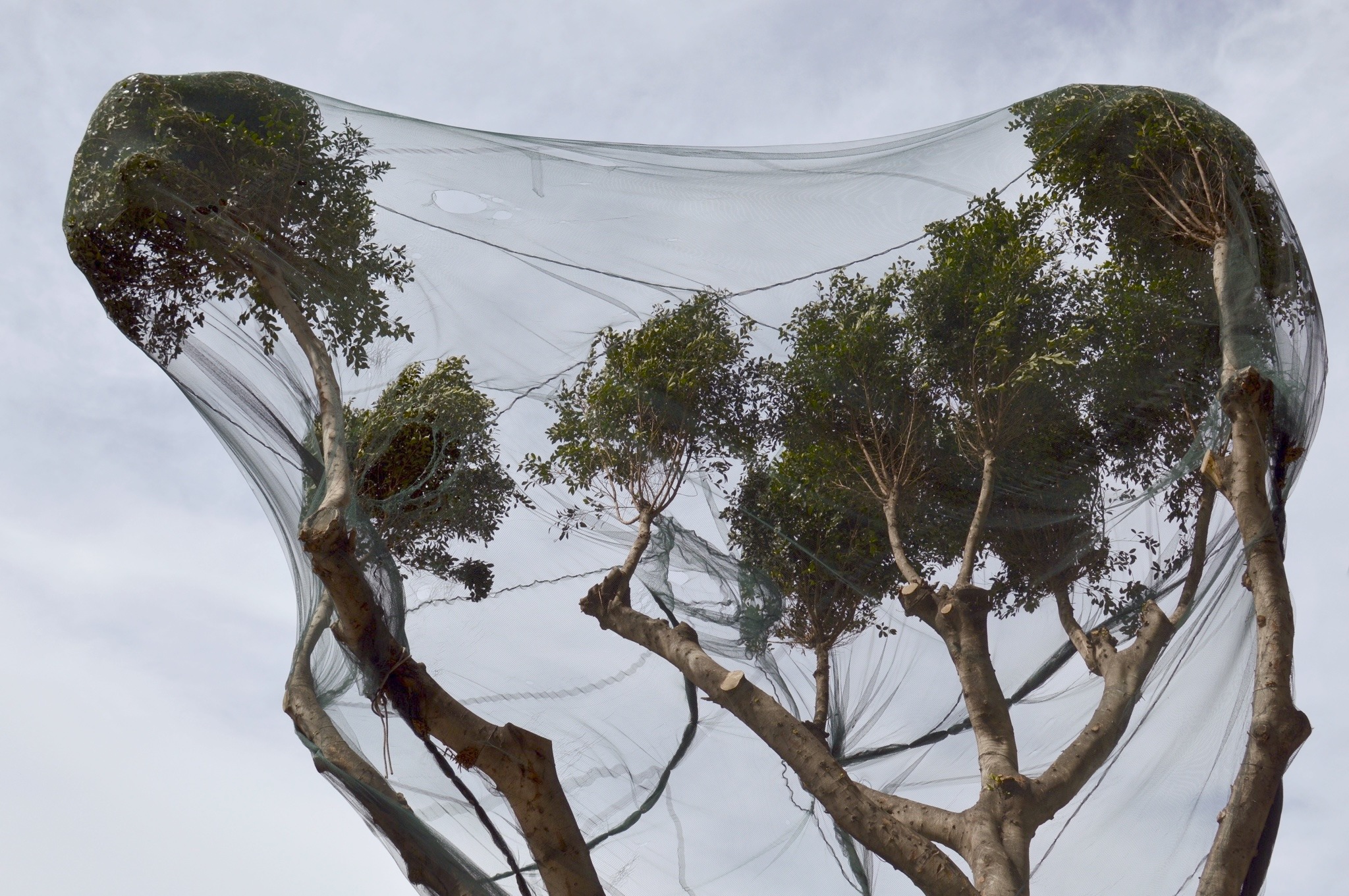
Landscape. Photo by Paolo Meloni.
It is taken to mean immediacy, intensity, heightened awareness—the feeling of being fully “there.” Presence becomes an event, a peak, a moment of saturation in which nothing seems to be missing. What disappears in this account is precisely what presence once demanded: duration, restraint, the willingness to remain before what does not resolve itself.
Older traditions were wary of such conflations. They knew that immediacy could be deceptive, that intensity could distract, that fullness could anesthetize as easily as it could illuminate. Presence, for them, was never equivalent to transparency or completion. It was not the erasure of distance, but the ethical endurance of nearness.
To be present, in this sense, was not to seize what appears, but to remain answerable to it—even as it withdraws.
This distinction matters because much of modern thought has come to associate presence with self-grounding: with the idea that what is most real is what is fully given, fully accessible, fully present to consciousness. Absence, under this view, becomes a problem to be solved, a lack to be filled, a failure of appearance.
The discipline of presence proposed here moves otherwise.
Presence does not negate absence.
It learns to stand with it.
What is addressed is not the fantasy of total disclosure, but the practice of staying before what resists being exhausted by meaning. Presence, here, names not a state of fullness, but a posture maintained in the face of incompleteness. It does not promise clarity. It demands fidelity.
In the language of hikmah, this orientation has been described as knowledge by presence—'ilm al-hudūrī. Not as immediacy for its own sake, and certainly not as psychological absorption, but as a mode of knowing in which the knower does not stand apart from what is known, nor claim to possess it. One does not stand outside and look in; one is already placed, already implicated.
Yet even this formulation requires care.
Knowledge by presence is not romantic immediacy. It is not a celebration of intuition against thought, nor a refusal of intellect. It is a corrective to the assumption that knowing must always pass through representation, mediation, or conceptual mastery. Presence, in this sense, is not opposed to thinking—it precedes the claim that thinking is sovereign.
This insight did not emerge all at once, nor belong to a single voice. It surfaces gradually across the history of Islamic thought wherever self-awareness, nearness, and being are understood as inseparable—finding particular philosophical clarity in the Illuminationist tradition associated with Suhrawardī, and later receiving a more comprehensive metaphysical articulation in the work of Mullā Sadrā. What is at stake in these traditions is not the celebration of immediacy, but the disciplined recognition that not all knowing passes through representation.
Illuminationist thought is helpful precisely because it resists vagueness. Presence is not treated as a psychological state, but as a matter of degree—degrees of light, degrees of awareness, degrees of proximity. Nearness may deepen or recede; witnessing may sharpen or dim. The soul, described as luminous by nature, is not guaranteed access to truth by virtue of existence alone. Presence requires discipline. It can be lost through distraction, excess, or haste.
This is why duration matters.
Presence does not announce itself in moments of intensity. Those moments may interrupt, awaken, even unsettle—but they do not yet constitute presence. Presence begins only after interruption has passed, when nothing insists, when no affect sustains attention, when the world no longer performs.
What remains then is not immediacy, but endurance.

Naturally dyed fabric. Korean Folk Village, Yongin, Gyeonggi Province. Photo by Jang Jun-ho.
Presence is not simply there or absent; it can deepen or recede. And this deepening is not merely inward. It is ontological. The soul may be more or less unveiled, more or less capable of witnessing, more or less able to remain before what is without turning away. The power of presence is proportional to nearness; nearness is inseparable from light.
To stay present is not to maintain heightened awareness, nor to preserve a feeling of depth. It is to remain answerable when nothing rewards that answerability—to stay when meaning thins, when absence asserts itself, when the self’s desire for confirmation goes unmet.
Henry Corbin’s readings of Illuminationist philosophical texts emphasized this dimension of endurance, describing presence not as an epistemological claim alone, but as a disciplined posture of attentiveness and response. In these traditions, knowledge is not simply accumulated; it is undergone. One does not seize meaning, but becomes capable of receiving it.
This discipline runs against many contemporary habits of thought. Knowledge today is often organized around peaks—insight, critique, innovation, transformation. What lies between these peaks—repetition, maintenance, waiting—is treated as residue. And yet it is precisely within this interval that presence is either sustained or lost.
What does this suggest for architecture?
Perhaps architecture is not evidence for these ideas, but their training ground.
Architecture once operated primarily within this interval. Its task was not to generate meaning repeatedly, but to hold conditions steady so that meaning could arrive without being forced. Walls did not explain. Floors did not persuade. Light did not dramatize. They did not stand between the inhabitant and the world. They did not interpret on their behalf, move on their behalf, or feel on their behalf. Rather, they persisted—day after day, year after year—offering no spectacle, only orientation.
This is why presence cannot be equated with atmosphere. Atmospheres fluctuate. They depend on mood, novelty, perception. Presence, by contrast, requires austerity. It asks space to resist seduction, reassurance, and excess intention. Only then can the inhabitant remain exposed to what exceeds them without retreating into self-reflection.
To remain present, then, is not to dwell in immediacy, but to submit to duration.
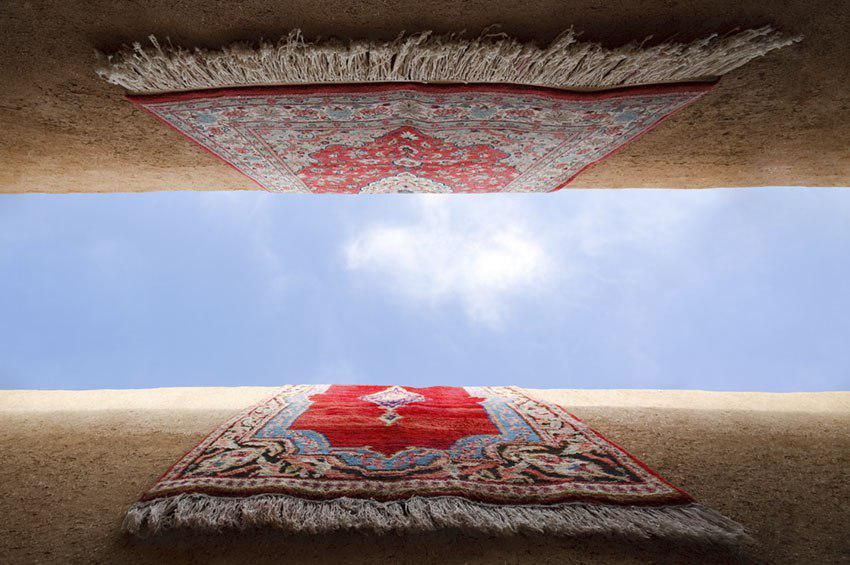
Jalal Sepehr, Knot series. Yazd, Iran, 2011. Photo by the artist.
the muted murmur of colors
the pulse of wool’s blood
in the veins of the knot
and the delicate lives of fingers
that are trampled underfoot
— Ahmad Shamloo, To Ayda (1955)
Such submission is difficult. Without constant stimulation or affirmation, the self encounters its own instability. Presence reveals not fullness, but insufficiency. It does not elevate; it levels. And yet it is precisely here—within this leveling—that another mode of knowing becomes possible: a knowing that does not accumulate insight, but maintains orientation; a knowing that does not advance through mastery or critique alone, but deepens through patience.
This has consequences for architectural authorship.
It suggests a way of designing—and of writing—that does not begin by conquering its subject, but by allowing itself to be altered by what it encounters. A slow circling. A careful naming. A refusal to flatten experience into content or effect.
Illuminationist sources sometimes describe true knowing in terms of inner witnessing (mushāhada), “tasting” (dhawq), and unveiling—modes of access that are not anti-intellectual, but prior to the intellect’s possession of the thing. Discursive thought can clarify, test, and order; but it is not always the origin of what matters most. The question, then, is not what architecture signifies or clarifies, but what kind of presence it sustains.
Here, Corbin’s ethic of posture becomes especially instructive: not the posture of the sovereign thinker, but of the listener—“Spirit can only reveal; I can only listen.”
The aim here is not to recover presential knowing in its classical form. Rather, it is to reread these frameworks through architectural questions of placement, duration, and material restraint—asking how built space might still train attention toward presence, even under contemporary conditions that make such modes fragile and difficult to sustain.
This posture does not reject the contemporary world, nor does it imagine escape from it. It endures within it, quietly, without seeking resolution or recognition. It accepts that conditions are compromised, that coherence is partial, that meaning may never fully arrive.
This is not passivity.It is the active labor of receptivity: learning to be addressed without immediately converting what addresses us into a tool.
What it refuses is the demand to compensate for incompleteness through assertion, control, or excess explanation.
Architecture, when it participates in this discipline, becomes less visible but more exacting. Its success is measured not by impact, but by whether it allows presence to persist when everything else urges movement. It shelters not revelation, but staying open to it.
This kind of presence does not announce itself as sacred. It does not claim authority. It does not promise transcendence. And yet without it, imagination drifts into fantasy, and transcendence collapses into projection.
Presence, in this sense, is not the beginning of wisdom.
It is the labor that makes wisdom inhabitable.