




Transcendence is not a place you storm.
Across civilizations, it has been approached obliquely—through patience rather than conquest, through preparation rather than declaration. What matters is rarely the moment of arrival; it is the slow reorientation of a life. Before ascent, there is alignment. Before illumination, there is restraint. Before vision, there is the long schooling of attention.
This is a stubborn human intuition, repeated in different languages and worlds: transcendence is not seized; it is made possible. And because it is made possible, it is never merely an “idea.” It is a form of readiness—ethical, perceptual, spiritual, and, quietly, architectural.
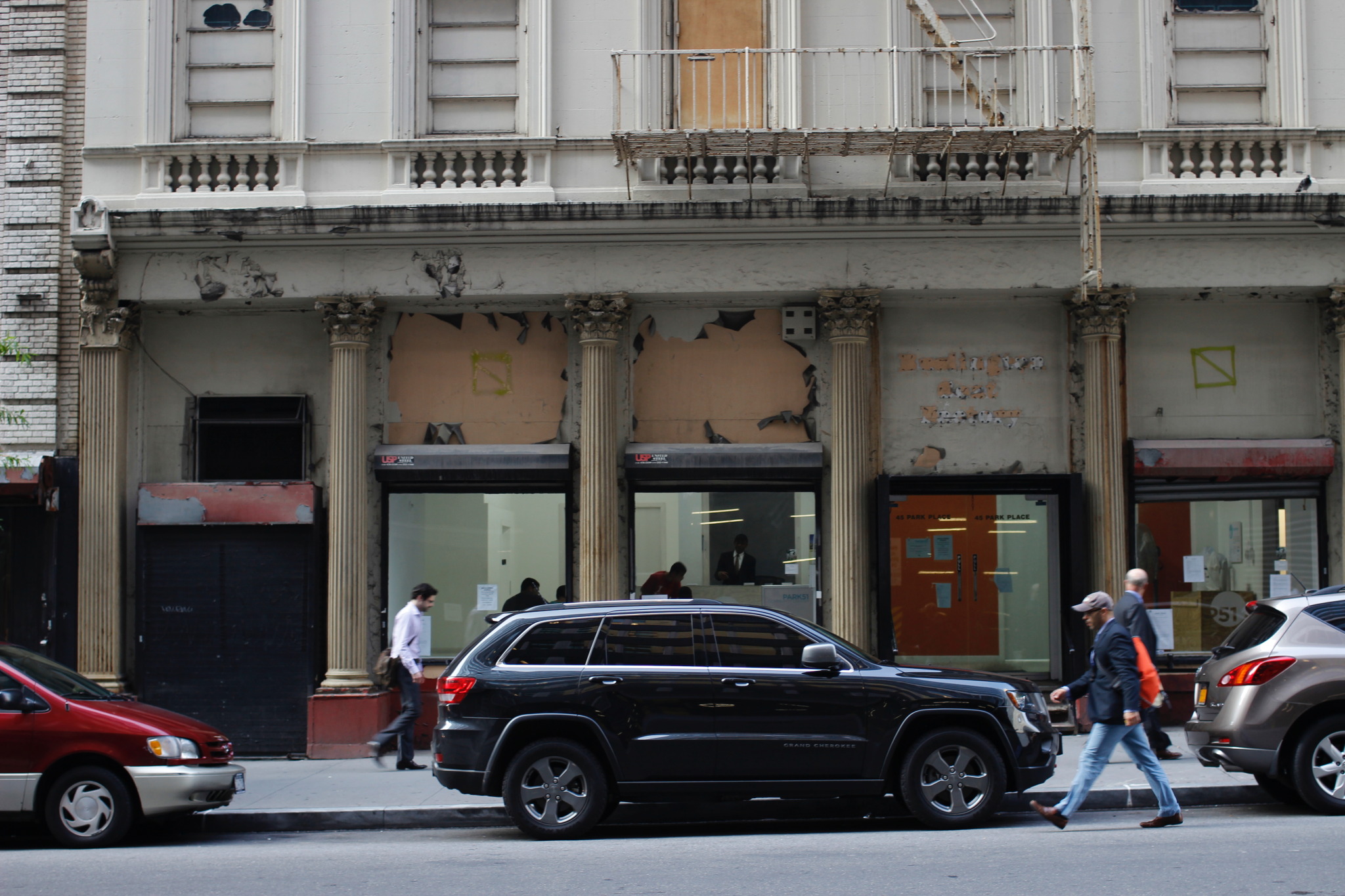
45-51 Park Pl, New York, Photo by Somayeh Chitchian (2013).
Orientation Before Ascent
Wisdom traditions rarely begin by describing the summit. They begin by teaching a body and a soul how to stop scattering themselves.
Attention must be gathered before it can be refined. Desire must be schooled before it can be trusted. The senses must be disciplined before they become transparent rather than distracting. In this sense, transcendence is not the opposite of embodiment; it is what embodiment becomes when it is no longer shattered into impulses. Silence precedes speech. Interval precedes insight. The world must be allowed to differentiate again—near and far, inward and outward, before and after—so that movement regains direction.
This is why transcendence is so difficult to speak about in the modern register: modernity trains speed without direction, sensation without interval, choice without measure. It produces a life that is busy—but not necessarily oriented.
Modern Life and the Erosion of Readiness
The quiet difficulty of transcendence today lies less in disbelief than in distraction.
Contemporary life is structured to fragment attention, accelerate response, and flatten difference. Time is compressed. Space is optimized. Silence is treated as inefficiency. In such conditions, transcendence does not appear false; it appears irrelevant. This is not a failure of individuals. It is a condition of environments.
So the task is not primarily to convince. It is to recondition.
To recover forms of inhabitation that make readiness possible again—through rhythm, limit, proportion, and the restoration of thresholds. This is slow work. It cannot be accomplished through slogans or aesthetic moodboards. It requires sustained care: care of spaces, care of time, care of the ways we enter and leave and pause. Architecture cannot solve this alone. But it can participate.

45-51 Park Pl, New York, Photo by Somayeh Chitchian (2013).
When the Self Becomes the Measure
One of the quiet distortions of modern life is not that transcendence is denied, but that the self becomes the default horizon of meaning.
When reality is filtered almost entirely through preference, efficiency, and personal experience, transcendence does not disappear—it becomes unintelligible. What exceeds the self is no longer attacked; it is simply rendered optional, decorative, “not for me.” The world is approached as material to be managed rather than a reality to which one must become adequate.
Many traditions diagnose this not as moral failure but as a mis-measure—an error of orientation. Attention turns inward too quickly. Desire outruns discernment. The self hardens into a small sovereign. And in that condition, transcendence can only appear as an abstraction—because the conditions for encountering it have quietly eroded.
If transcendence is real, then the question is not “Do I believe in it?” but: What kind of life can still receive it?
Preparation, Not Possession
Across Islamic, Indic, East Asian, and African metaphysical traditions alike, one finds a shared refusal: transcendence does not belong to the self as property.
It is approached through practices that remove obstructions rather than accumulate power. Unlearning matters as much as learning. Purification precedes insight. Silence precedes speech. The work is not to add another layer of explanation; it is to thin out what prevents clarity.
Here traditions diverge profoundly in doctrine and cosmology, but converge in rhythm: truth discloses itself when grasping relaxes.
This convergence matters for architecture, because architecture is one of the most powerful pedagogies of grasping and release that we collectively inhabit. A room can train the body toward impatience, or toward waiting. A building can rehearse domination, or rehearse humility. A city can dissolve thresholds, or restore them.
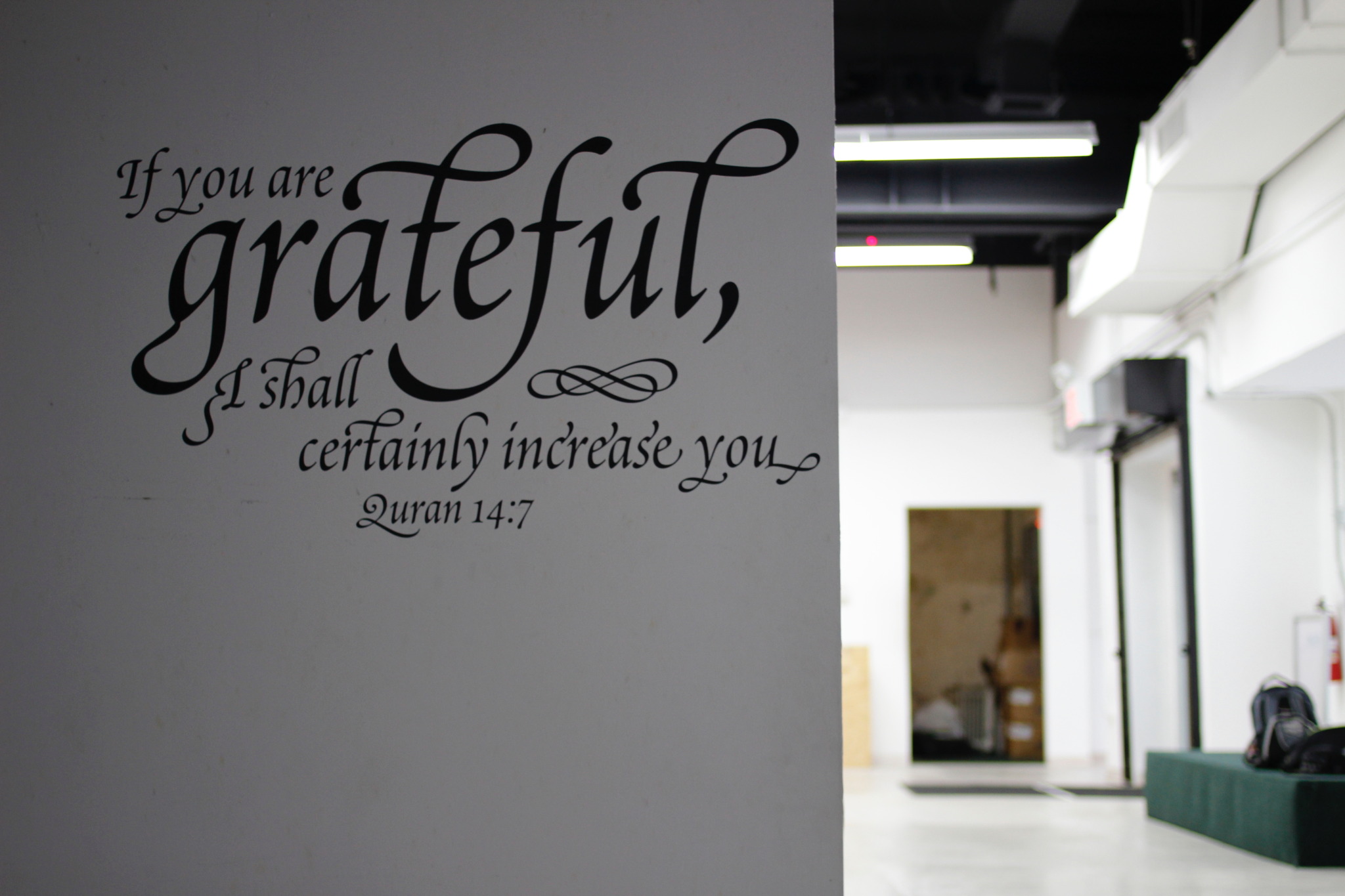
45-51 Park Pl, New York, Photo by Somayeh Chitchian (2013).
Restraint as a Form of Care
Modern culture often associates transcendence with excess: overwhelming experiences, heightened emotion, sensory saturation. Many older traditions insisted on the opposite. What opens the path is not amplification, but restraint.
Restraint does not mean denial of life. It means fidelity to proportion. It means refusing to consume everything at once. It means allowing experience to unfold rather than demanding immediacy. In restrained conditions, meaning thickens. Attention deepens. The self becomes capable of waiting.
This stands in sharp contrast to contemporary environments that prioritize constant availability, frictionless access, and uninterrupted flow. When nothing resists us, nothing transforms us. When every threshold is removed, movement loses direction.
Architecture, here, is not neutral. Spaces can train restraint—or erode it. They can invite lingering, or enforce circulation. They can allow darkness, silence, and withdrawal, or saturate perception until no interval remains. These are not merely aesthetic preferences. They are ontological decisions.
In your language: restraint is not “minimal design.” It is care—care for silence, care for interval, care for a kind of perceptual chastity in which the world is allowed to appear without being consumed.
The Middle World, Everywhere
In Islamic theosophy, this is the imaginal world: a real order of presence where visions, symbols, and subtle forms are encountered, not invented. In other traditions, this intermediary takes different names, but the insight persists: imagination is not mere fantasy; it is a mode of perception when disciplined and purified.
Many traditions insist that reality is not exhausted by the visible and the abstract. Between sense and intellect lies an intermediary domain—a world where meaning appears with form, yet without material enclosure.
African cosmologies—especially when articulated with philosophical clarity in contemporary theological work—offer a powerful corrective to modern habits of division. Rather than splitting the world into “natural” and “supernatural,” some African metaphysical grammars treat reality as layered but continuous: the seen and unseen interpenetrate; knowledge is inseparable from ethical formation and ritual practice; the world is relational, responsive, alive. This is not metaphor. It is ontology.
And this is where architecture quietly reveals its deepest vocation: it always operates in the “between.” Threshold, interval, opening, frame, passage, pause—the light that is not the wall, the silence that is not the void. Architecture is a craft of the middle world. It is one of the few disciplines that can make the between felt without having to explain it.
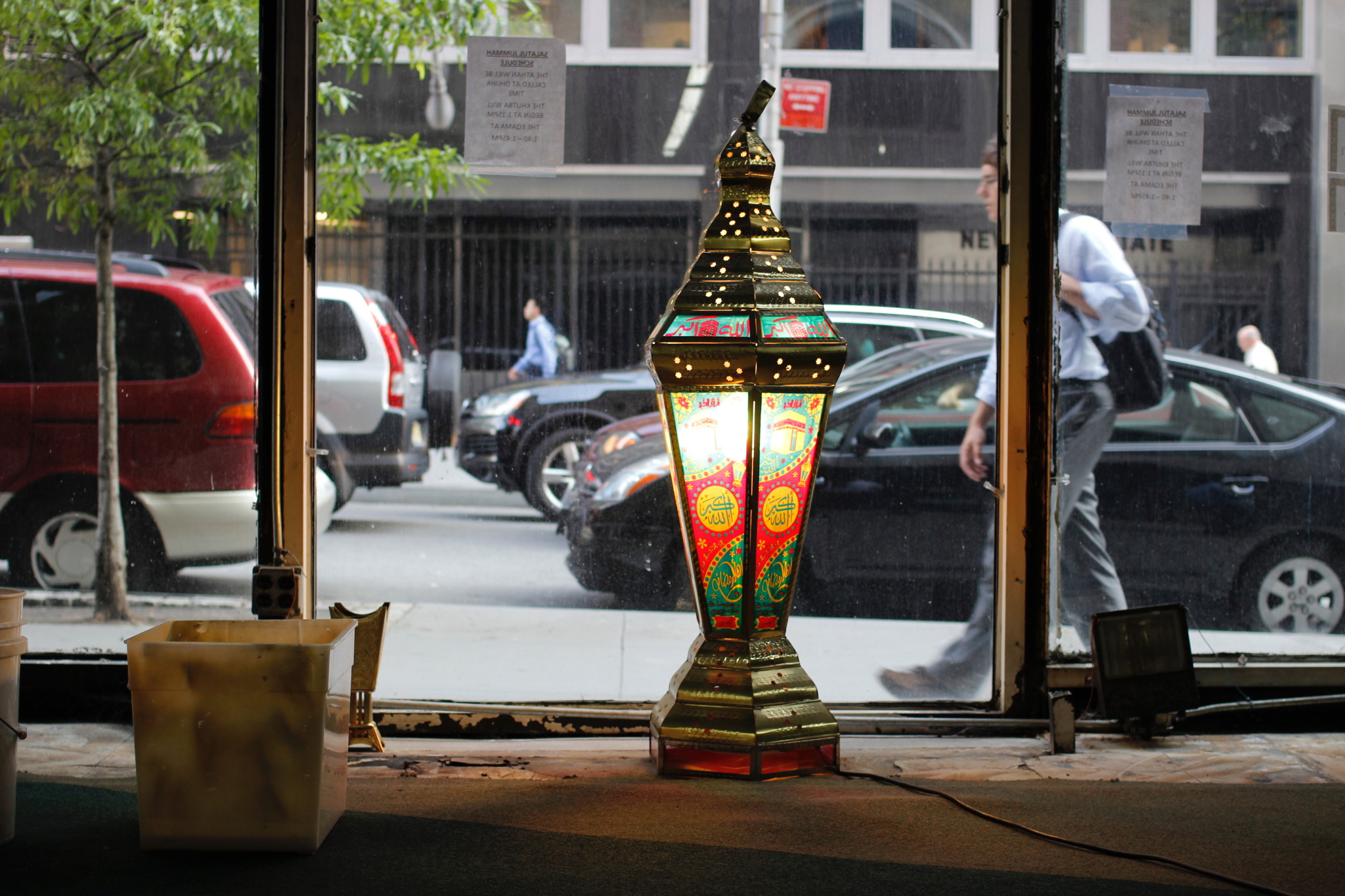
45-51 Park Pl, New York, Photo by Somayeh Chitchian (2013).
A North American Echo
When transcendence surfaces in the North American imagination, it often does so through nature, inwardness, and moral intuition. The Transcendentalist movement did not emerge from nowhere. It was a response to enclosure—industrial, theological, epistemic.
In figures like Emerson and Thoreau, one senses the intuition that reality exceeds institutional forms, and that the human being can be reoriented through attentiveness: to silence, to conscience, to the living world. In architecture, this intuition can take the form of an organic sensibility—space as participation rather than domination, dwelling as continuity rather than conquest.
Placed alongside Islamic theosophy, African metaphysics, and Asian contemplative traditions, American Transcendentalism appears not as origin but as echo: a regional articulation of a wider human refusal to let the world be reduced to mechanism alone.
Technē and the Built World’s Hidden Theology
One of the most urgent questions today is not whether we are “spiritual,” but what kind of world our environments assume reality to be.
There are ways of changing the world that intensify domination, and ways of acting that protect meaning, vulnerability, and life. Architecture sits directly inside this distinction. It can become an apparatus of technic—optimization, surveillance, extraction, frictionless circulation—or it can become a custodian of non-instrumental value: sanctuary, pause, dignity, refusal of excess.
This is not romanticism. It is a sober civilizational question: what kind of reality does our built environment train us to believe in?
Architecture as Custodian of Conditions
If transcendence is approached through preparation, then architecture’s role becomes clear—and also humbling.
Architecture does not deliver transcendence. It cannot guarantee ascent. It cannot manufacture wisdom. What it can do is hold conditions—protecting stillness, preserving difference, allowing thresholds to matter again. It can refuse to flatten experience into sameness. It can resist the urge to explain everything.
Such architecture is not primarily symbolic. It is ethical. It asks: what kind of attention does a space train? What kind of self does it assume? What kind of world does it quietly affirm?
And this is where your platform’s arc coheres—without having to announce itself too loudly: presence disciplines attention; imagination refines the faculty of seeing; transcendence protects the soul from enclosure.

45-51 Park Pl, New York, Photo by Somayeh Chitchian (2013).
Toward the Limit
This entry does not close the conversation. It opens it.
Across traditions, one sees that transcendence is never isolated from practice, never detached from discipline, never available without restraint. It is not the prize of the clever. It is not the aesthetic of the refined. It is what becomes possible when a life—slowly, repeatedly—stops treating the self as measure.
The final entry will move closer to the edge: to the point where even preparation yields, and fidelity is measured not by what is achieved, but by what remains open.
For now, it is enough to recognize the shared insight that so many lineages protect:
Transcendence does not begin at the summit.
It begins with how one prepares the ground.