



It was not a place one noticed at first.
There was no façade to announce arrival, no architectural gesture that claimed presence within the city’s visual order. Entry was indirect—through a side door of a cathedral in downtown Boston, past the grandeur of stone columns and stained glass, and then away from it, through a backroom stair that descended quietly beneath the official life of the building.
The contrast was unmistakable.
Above: monument, history, legibility, authority.
Below: compression, anonymity, careful negotiation.
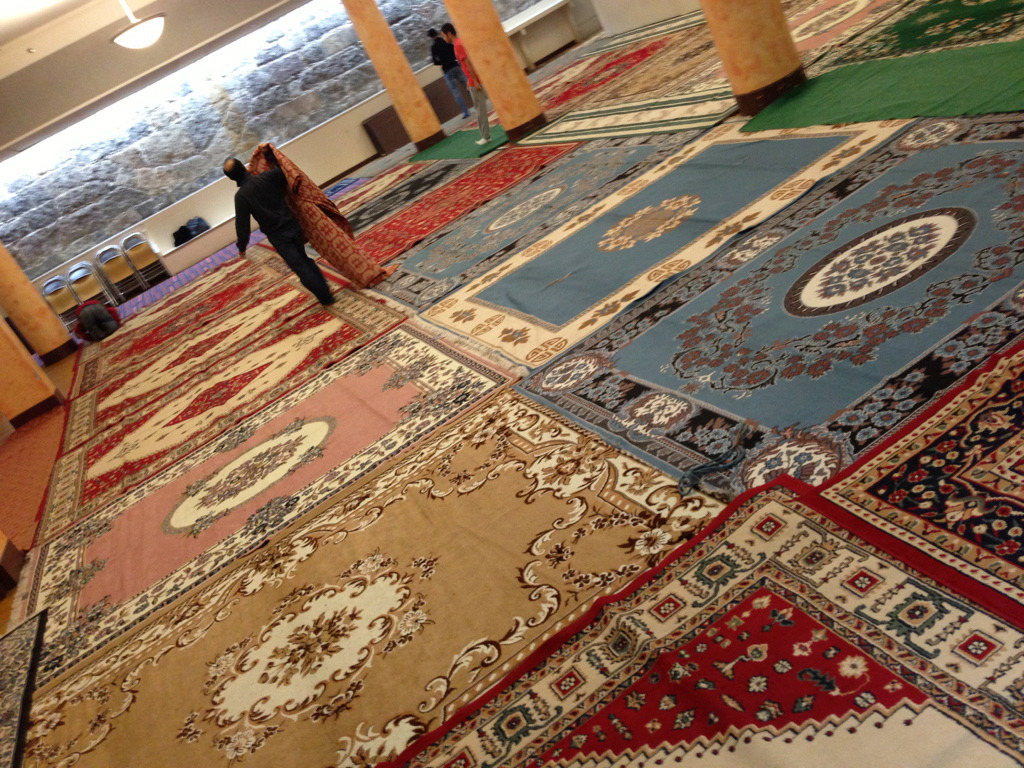
“My house shall be called a house of prayer for all.” (Isaiah 56:7–8). Study of a recurring temporary prayer space within a church basement, downtown Boston. Photo by Somayeh Chitchian, Fall 2012.
The basement space was never meant to host prayer. Its proportions were those of a gathering room, shaped for accommodation rather than devotion. Its finishes were simple. Concrete met carpet. Walls bore the marks of use rather than intention.
This was not transformation as design.
It was transformation as work.
The work began with movement.
People arrived from all directions and all walks of life—students, workers, immigrants, converts—filling the narrow stair until it grew crowded, until bodies pressed close and time began to slow. Shoes were removed without instruction. Rugs were pulled from large drawers embedded into the room itself and unrolled together, edge to edge, until the floor was reoriented.
There was no visible mihrab.
Instead, the congregation aligned itself toward the exposed stone foundation wall. Rough. Load-bearing. Unadorned. In an interview, one participant named this absence with quiet precision:
“These foundation stones are an expression of how I feel about Islam.”
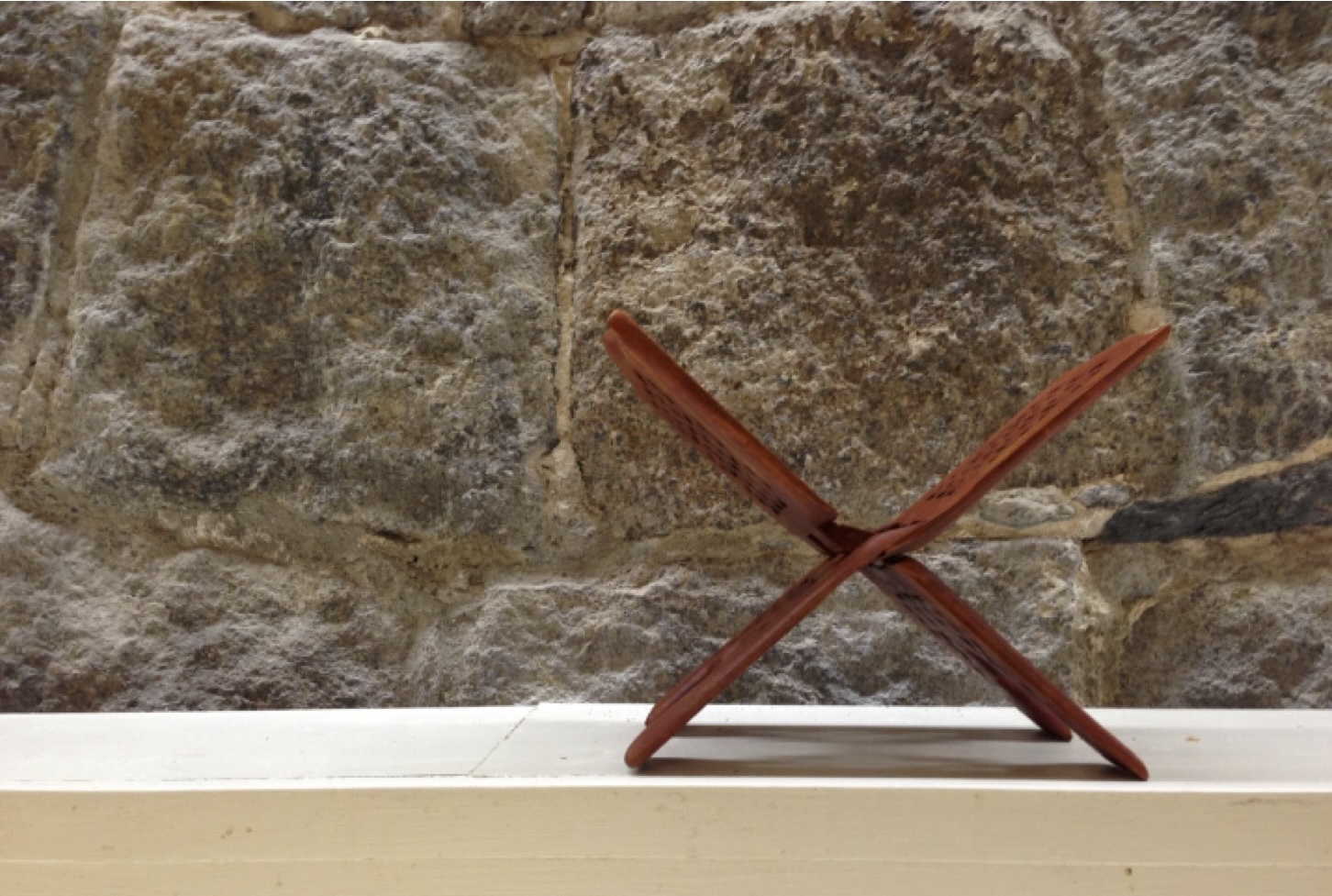
Temporary prayer space, downtown Boston. Photo by Somayeh Chitchian, Fall 2012.
What faced the congregation was not symbol but structure.
Not representation but support.
In that moment, architecture ceased to be a matter of form and became a matter of orientation—not because form was rejected, but because form had been reduced to what could be sustained under constraint.
The space did not prescribe belief, nor did it frame transcendence through aesthetic display. It did not offer meaning as spectacle. What it demanded instead was attentiveness: to direction, to rhythm, to one another.
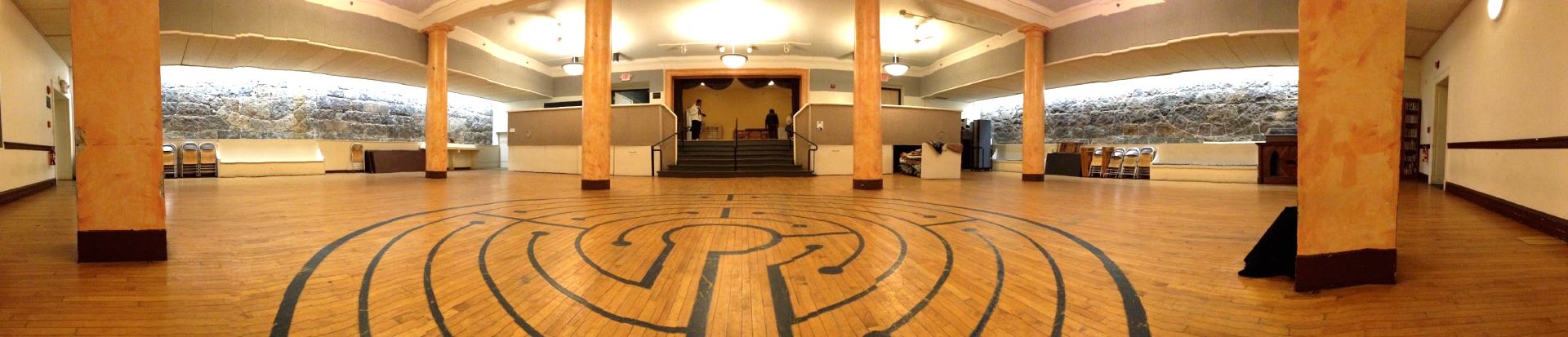
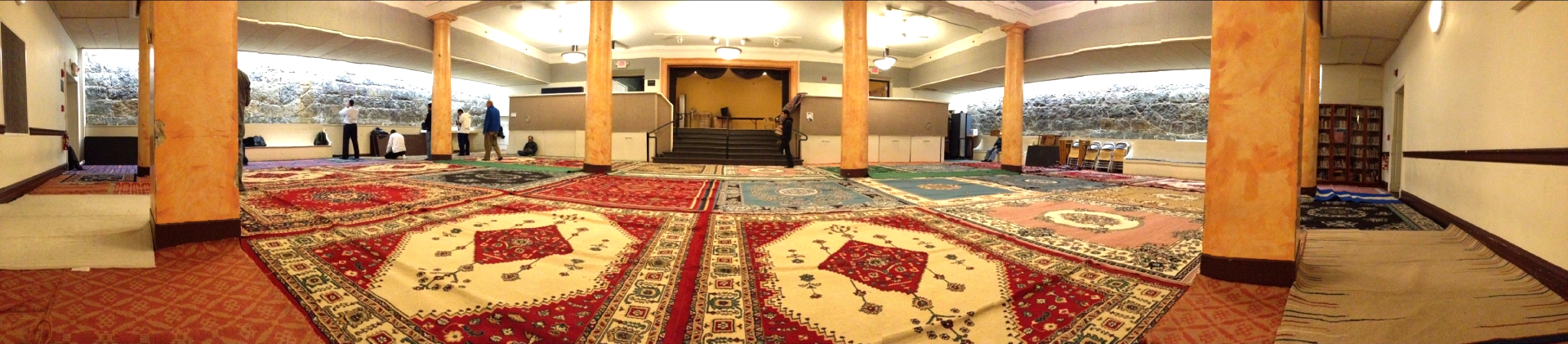
Temporary prayer space, downtown Boston. Photo by Somayeh Chitchian, Fall 2012.
Prayer unfolded not as an event but as a thickening of time. Sound changed. Breath synchronized. The room filled completely, and then more. The density of bodies dissolved individuality without erasing difference. What emerged was not unity as sameness, but coherence as shared direction—fragile, temporary, and dependent on continued participation.
This was not nostalgia for a lost world.
It was not the preservation of tradition as artifact.
It was practice under constraint.
In the absence of formal religious architecture, what became visible was something more elemental: a mode of dwelling in which space was received rather than claimed, and meaning disclosed itself through repetition rather than declaration. The sacred here did not occupy territory. It passed through it, contingent on care.
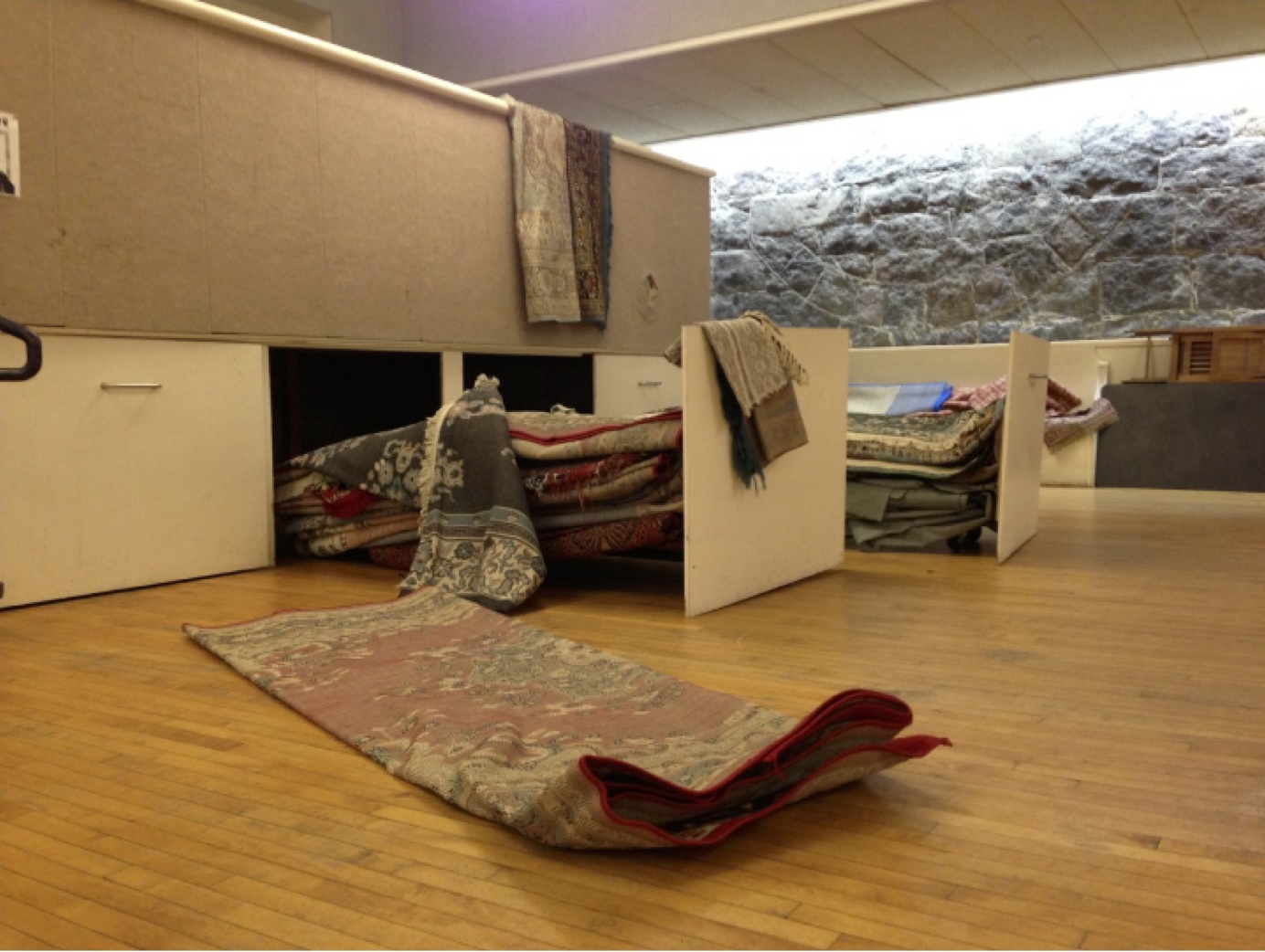
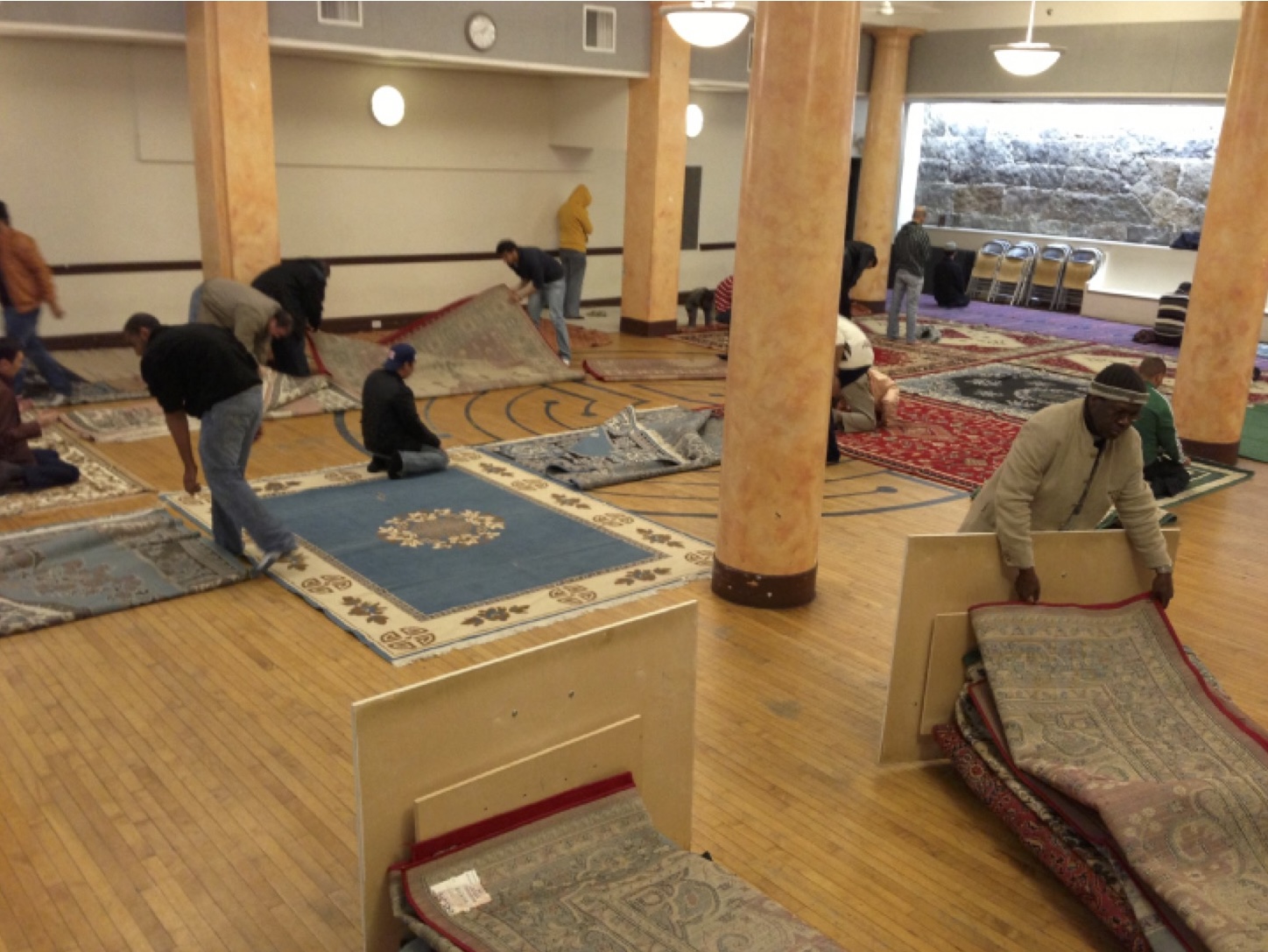
Temporary prayer space, downtown Boston. Photo by Somayeh Chitchian, Fall 2012.
When the prayer ended, the space withdrew. Rugs were folded. Drawers closed. Shoes returned to feet. The ascent back to street level was swift. The city resumed its rhythm. Nothing on the surface testified to what had taken place below.
And yet something had been reoriented—not in the city, but in those who had descended and returned.
What this basement mosque revealed was not an escape from modern conditions, but a way of inhabiting them without fully exhausting oneself within their dominant metaphysical orientations. The gathering operated entirely within contemporary urban life—subject to zoning laws, borrowed space, temporary permissions—yet it resisted the reduction of space to neutrality, gathering to function, and architecture to expression.
This resistance was not oppositional.
It was procedural.
The space did not claim identity.
It did not monumentalize belonging.
It did not translate faith into image.
Instead, it sustained a discipline in which orientation preceded form, being preceded representation, and ethical comportment quietly governed spatial arrangement. What appeared was not wisdom as doctrine, but wisdom as practice—tentative, interruptible, and dependent on renewal.
If modernity had stripped Islamic architecture of its historical layers—empire, monumentality, cosmology—what remained here was not emptiness but exposure. And exposure, once acknowledged, demanded restraint rather than compensation.
These gatherings did not offer answers.
They offered posture.
They taught how to stand within a fractured world without attempting to repair it through domination. How to gather without spectacle. How to pray without image. How to return—not to a past world, but to the conditions under which meaning could still be oriented, however briefly.
It was here that hikmah appeared—not as an achievement, but as a discipline.
Not as synthesis, but as holding-together.
Not as transcendence overcome, but as transcendence kept in view without claiming access.
Hikmah here did not belong to the space, nor to the community as a stable identity. It emerged only insofar as intellectual discernment, ethical restraint, and embodied practice remained aligned.
This alignment was neither total nor permanent.
It was rehearsed.
In the tradition of hikmah, knowledge is never static. It unfolds as movement—one that begins in presence, passes through imagination, and deepens toward transcendence not by escape, but by return. What migrated here was not only the body descending below street level, but perception itself, loosening its grip on mastery and relearning how to receive.
This was not a migration toward resolution.It was a migration toward attentiveness.
Each gathering retraced the same movement: from surface to depth, from assertion to orientation, from form as image to form as alignment. Not to preserve a past, but to test whether another mode of being human could still be sustained under modern constraint.
In this sense, the absence of monumentality was not a loss. It was a clarification. Stripped of accumulated layers—historical, political, architectural—what remained was the ethical core of building: preparing conditions under which the soul might be rightly placed, even if only for a time.
Yet these moments did not seek to undo the modern subject. They enacted something more modest and more difficult: brief withdrawals from the total claim of autonomy, mastery, and self-grounding. In prayer, perception loosens. Orientation shifts. The self is no longer the sole measure of meaning—if only temporarily.
Hikmah appears here not as a state to be possessed, but as a practice to be guarded—a fragile coherence maintained through repetition, restraint, and care. It does not stand outside modernity, nor does it seek to overcome it. It introduces moments of quiet interruption from within.
These spaces do not promise permanence.
They offer posture.
They remind those who gathered that another way of inhabiting the world remained thinkable, livable, and—however briefly—inhabitable.
This is not the end of a journey.
It is one of its quiet thresholds.
A place where return does not mean retreat, but recalibration—where architecture, reduced to its most modest gestures, still bears the weight of guiding the soul, cautiously and without guarantee, from one world toward another.