



These are texts that do not seek to persuade.
They establish the ground from which meaning, form, and orientation arise.
Read them slowly, when what is visible asks for its source.
The primary horizon of meaning within Islamic cosmology, where revelation unfolds through rhythm, imagery, and spatial orientation. The Qur’an repeatedly invokes gardens, paths, light, thresholds, and ascent—establishing a cosmology that is as spatial as it is ethical.
Spatial relevance:
Orientation, light, gardens, paths, ascent, revelation

A concise yet profound poetic exposition of Islamic metaphysics, Golshan-e Rāz unfolds complex questions of being, imagination, unity, and unveiling through dialogical verse. Rather than arguing philosophically, the text guides the reader through a garden of meanings, where knowledge is disclosed through contemplation, symbol, and inward traversal.
Spatial relevance:
Garden as cosmogram, path and stations, unveiling (kashf), threshold between form and meaning, inward journey

A meditation on light as the structure of reality and perception. Here, illumination is not metaphor but ontology, shaping how beings appear, relate, and are known across levels of existence.
Spatial relevance:
Light, hierarchy, degrees, illumination, presence

A foundational articulation of reality as a hierarchy of lights rather than substances. Space and form emerge through degrees of luminosity, making orientation and presence central to knowledge itself.
Spatial relevance:
Light hierarchies, orientation, luminous worlds

A rigorous philosophical framework grounding being, intellect, and imagination. Avicenna provides the structural clarity that later visionary traditions inhabit and transform.
Spatial relevance:
Intelligible worlds, mediation, form, order

An expansive cosmological text where revelation unfolds through journeys, encounters, and unfolding worlds. Space here is alive, responsive, and inseparable from spiritual realization.
Spatial relevance:
Worlds, journeys, unfolding, presence
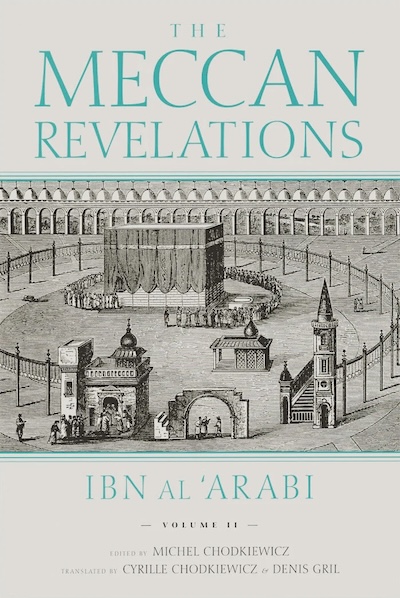
A concise yet dense articulation of prophetic wisdom as distinct modes of being and knowing. Each chapter forms a metaphysical station, shaping how reality is disclosed through form and meaning.
Spatial relevance:
Stations, manifestation, prophetic forms
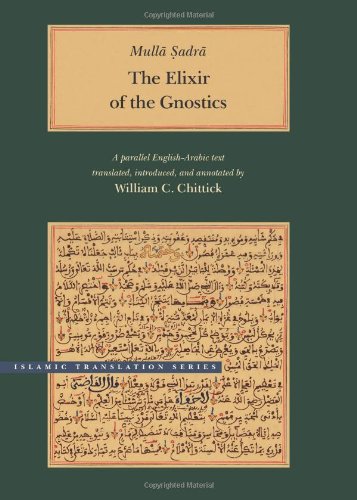
A luminous synthesis of philosophy, theology, and spiritual insight. Sadrā reads revelation as a dynamic unfolding of being, where existence itself moves, intensifies, and ascends.
Spatial relevance:
Substantial motion, ascent, unfolding existence

An intimate account of knowledge as transformation rather than accumulation. Here, wisdom is inseparable from becoming, and reality reveals itself through lived ascent.
Spatial relevance:
Becoming, motion, transformation, inward ascent
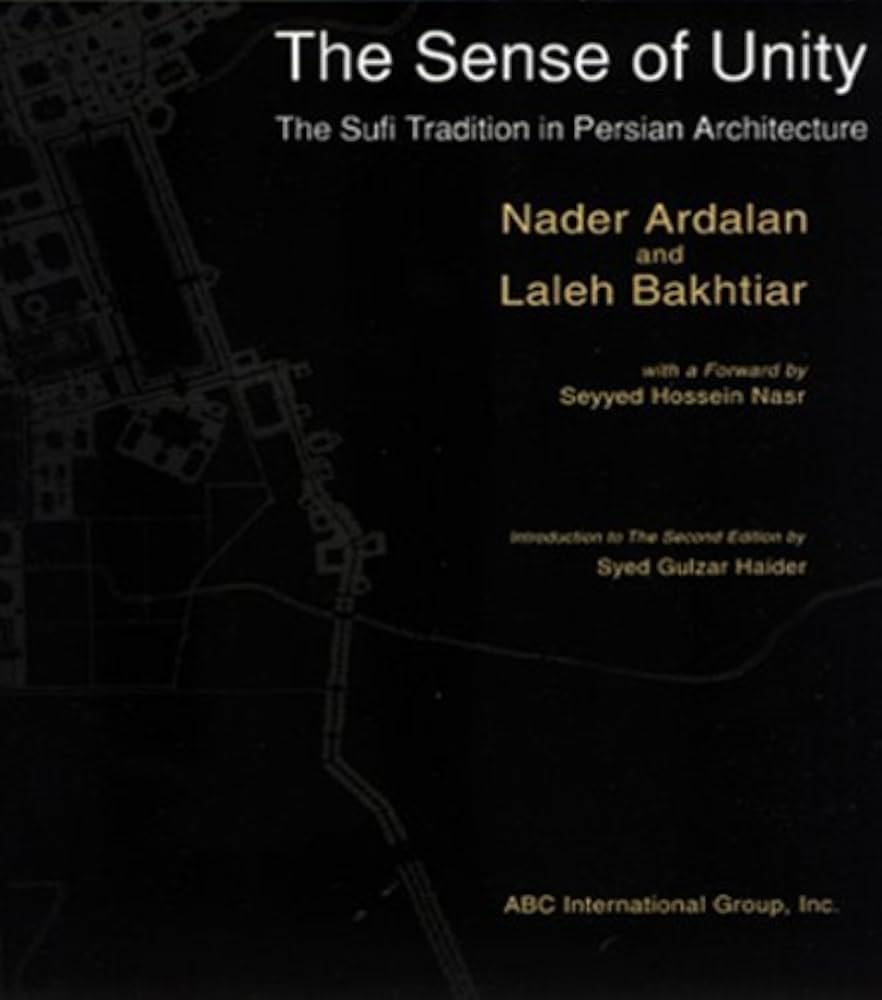
A rare architectural text grounded in Islamic metaphysics and cosmology. It demonstrates how built form once mirrored cosmic order, presence, and unity without representation.
Spatial relevance:
Architecture, unity, geometry, sacred order
An exploration of sacred art as a language of presence rather than expression. Burckhardt reveals how form, proportion, and pattern participate in metaphysical truth.
Spatial relevance:
Form, proportion, sacred geometry, presence
A foundational critique of modern epistemology paired with a defense of traditional modes of knowing. The sacred here is not an object but a horizon that orders space, knowledge, and life.
Spatial relevance:
Order, hierarchy, sacred cosmos
A series of essays that restore myth as a mode of truth rather than fiction, revealing how symbols open passages between visible form and invisible meaning. Coomaraswamy shows that myth does not decorate reality; it orients it, offering a grammar through which worlds become intelligible and inhabitable.
Spatial relevance:
Threshold, passage, symbol, orientation, vertical axis

This article traces how Islamic traditions once sustained an integrated hierarchy of knowledge—linking revelation, intellect, reason, and lived practice—and how that unity was fractured under colonial and postcolonial epistemic regimes. Lumbard argues that true decolonial work requires more than critique; it demands the recovery of epistemic confidence grounded in Islamic metaphysics rather than borrowed secular frameworks.
Spatial relevance:
Offers a framework for understanding architecture, education, and built environments as expressions of epistemic order—revealing how spaces participate in either epistemic sovereignty or epistemic erosion.