




These are texts that name a fracture without spectacle.
They trace how reason drifted from wisdom, and freedom from orientation.
Read them when the world feels coherent—yet no longer whole.
A sustained philosophical and spatial study of the Persian garden as an imaginal form, grounded in Suhrawardi’s illuminationist ontology. The dissertation reads landscape not as symbol or representation, but as a mode of presence shaped by vision, light, and metaphysical geography.
Spatial relevance: garden as imaginal world, light and orientation, landscape as ontological threshold, Suhrawardian cosmology

A comparative inquiry into architecture as a mediator between body and soul across premodern Islamic and Western traditions. This dissertation foregrounds architecture as a formative discipline of the self, where spatial order participates in ethical, spiritual, and corporeal alignment.
Spatial relevance: embodiment and ascent, architecture as moral–spiritual formation, body–soul correspondence, premodern cosmologies of space

A rigorous philosophical investigation into Suhrawardī’s illuminationist system, centred on the ontology of light as both epistemic principle and mode of being. The dissertation revisits the allegory of the cave not as metaphor, but as a structured field of gradations between darkness and illumination, where knowledge unfolds through presence rather than representation. Through close readings of Suhrawardī’s texts, it articulates a cosmology in which light orders reality, perception, and the hierarchy of existence.
Spatial relevance: light as ontological structure, gradations of presence and concealment, the cave as epistemic space, illumination and orientation, Suhrawardian cosmology

One of the aims of this platform is to carry forward bodies of thought that have shaped Islamic intellectual and artistic traditions, yet remain largely inaccessible within contemporary English-language discourse—particularly in the fields of architecture, spatial theory, and design.
This work is not conceived as translation in the narrow, technical sense. Rather, it is a commitment to attentive engagement: reading these texts with care, thinking with them over time, and allowing their concepts—light, presence, imagination, ontological motion, and transcendence—to re-emerge through writing, teaching, visual inquiry, and spatial reflection. The forms this engagement may take are varied, but its orientation is consistent: to remain faithful to the depth of these traditions while opening pathways for encounter beyond their original linguistic and cultural contexts.
Carrying wisdom forward requires patience, responsibility, and love. It asks that ideas not be extracted or simplified, but lived with—so that when they appear again, they do so as living propositions rather than historical artifacts. Through this ongoing work, the platform seeks to cultivate conditions where these traditions can once again speak, not as distant inheritances, but as active sources for thought, practice, and imagination today.


Suhrawardi's Ontological Foundations of Art & Beauty
Brick and Imagination
An Interpretation of Iranian Islamic Architecture
Suhrawardi's Ontological Foundations of Art & Beauty
Brick and Imagination
An Interpretation of Iranian Islamic Architecture
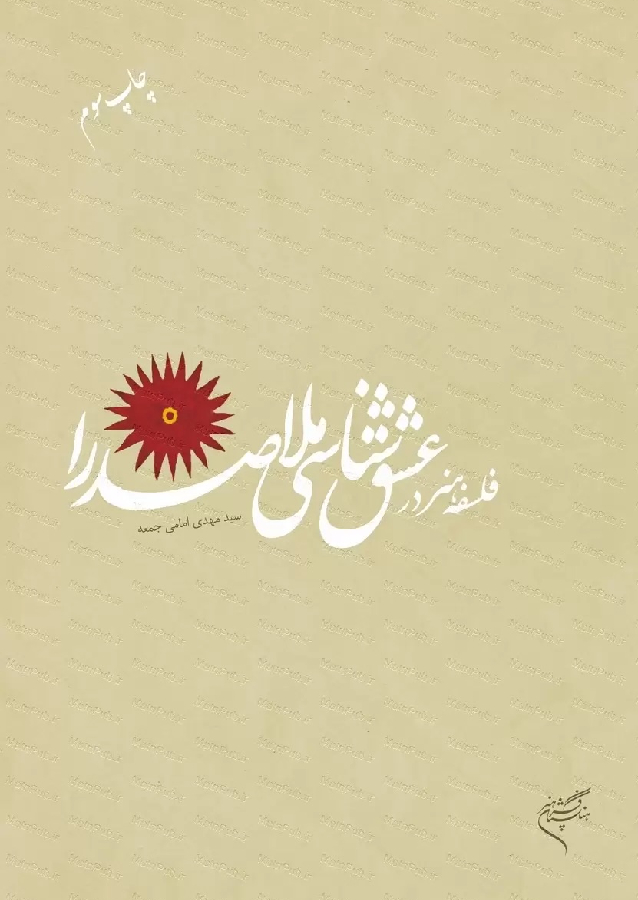

Philosophy of Art in Mulla
Sadrā's Doctrine of Love
Possibility & Necessity of Islamic Art in the Perennialist School
Philosophy of Art in Mulla
Sadrā's Doctrine of Love
Possibility & Necessity of Islamic Art in the Perennialist School